"North Korea and Iran going nuclear is not the same as Norway and St. Lucia going nuclear. "
- Mark Steyn
Why the HELL haven't I been reading this guy all along?
Tuesday, April 07, 2009


Monday, April 06, 2009
Quote of the Day
OK, so I just posted one. That was Sunday (barely). It's now Monday (by 14 minutes). A Tip of the Toque to the Ace of Spades Open Blog:
"If the pen is mightier than the sword, then criminalizing words is a way of disarming potential opposition..."
- Mark Steyn
"If the pen is mightier than the sword, then criminalizing words is a way of disarming potential opposition..."
- Mark Steyn
Sunday, April 05, 2009
Neil Cavuto is All Out of Bubblegum.
A Tip of the Toque to Aitch.
If you think that the government is our savior and the Nanny State is Utopia, you might find this video a bit unpleasant.
If, howver, you agree with Ronald Reagan that "The nine most terrifying words in the English language are, 'I'm from the government and I'm here to help'", you'll share with Neil Cavuto in his anger as he hands congressman Alan Grayson (S - Florida) his socialist head.
The current government -- both the executive AND the legislative branches -- want us to sign away our rights to them, and the only reassurance and justification they offer is "Trust us -- it's for your own good". No thanks, I've seen from history where that path leads, and if my country is to go down it, by God, it won't be without a fight from some of us.
If you think that the government is our savior and the Nanny State is Utopia, you might find this video a bit unpleasant.
If, howver, you agree with Ronald Reagan that "The nine most terrifying words in the English language are, 'I'm from the government and I'm here to help'", you'll share with Neil Cavuto in his anger as he hands congressman Alan Grayson (S - Florida) his socialist head.
The current government -- both the executive AND the legislative branches -- want us to sign away our rights to them, and the only reassurance and justification they offer is "Trust us -- it's for your own good". No thanks, I've seen from history where that path leads, and if my country is to go down it, by God, it won't be without a fight from some of us.
Everything Old is New Again
I've decided to go back to my old blog name, for several reasons. First of all, it matches the URL. Second of all, it reminds me, and the occasional reader, of somthing we all need to remember. Thirdly, I'm hoping the change will jar me out of my blogging doldrums and get the expressive juices flowing again. Finally, I just plain like it, always have, and miss it.
I'll still go by A Boy Named Sous as my Nom De Pixels, but the blog is, once again, Memento Moron.
Let's see how this goes.
I'll still go by A Boy Named Sous as my Nom De Pixels, but the blog is, once again, Memento Moron.
Let's see how this goes.
Quote of the Day
I'm not usually a big fan of bumper stickerisms -- liberal OR conservative -- because they tend towards strawmen and false dilemmas, two fallacies that irk me probably more than any others. But today I saw a bumper sticker ona very nice Ford F-250 in Eugene that I believe actually hits the nail on the head. It's today's quote of the day:
"Don't spread my wealth -- spread my work ethic."
"Don't spread my wealth -- spread my work ethic."
Tuesday, March 31, 2009
Quote of the Day
"If all men are created equal, that is final. If they are endowed with
inalienable rights, that is final. If governments derive their just power from
the consent of the governed, that is final. No advance, no progress can be made
beyond these propositions. If anyone wishes to deny their truth and their
soundness, the only direction in which he can proceed historically is not
forward, but backward toward the time when there was no equality, no rights of
the individual, no rule of the people. Those who wish to proceed in that
direction cannot lay claim to progress. They are reactionary."
- Calvin Coolidge, 5 July, 1926
A Tip of the Toque to Mike at South Texian.
Friday, March 27, 2009
All Things to All Men
As anyone who knows me or reads my blog knows, I'm incredibly fond of my home state, an equally proud of it -- despite my frustration with the political atmosphere here, it's a beautiful place, and outside the cities (especially Eugene and Portland), quite down-to-earth.
Also, despite what people think, Oregon, and the Northwest in general, is not one continual rainfall. One of the things that I've been proud of for quite some time, as it directly relates to the beauty of this place, is its incredible geological and climatic diversity, and the surprising way that diversity stacks Oregon up in comparison to other regions of the country.
I do not deny that there is beauty to be found across this great nation, nor do I imply we hold a monopoly on it. But what is amazing is the way in which so many diferent places in Oregon compare to so many different parts of the rest of the country. With the exception of a few very extreme examples (The Everglades, or the Grand Canyon, for instance), if you pick a specific place in America known for its geology, climate, and scenery, I can, with some effort, find somewhere in Oregon with similar features -- in some cases, admittedly, the Oregon version is a second-best copy, but in other cases, I'd happily stack Oregon up for comparison with confidence that we'd come out on top.
Let me give you a few examples. For copyright reasons, I am not posting any of the gorgeous pictures I found online here -- rather, I'm posting links and letting you see for yourself:
Hudson River Valley, New York
Columbia River Gorge, Oregon/Washington Border
Arizona's Painted Desert
Oregon's Painted Hills
The Blue Ridge Mountains
The Coast Range
A Maine Lighthouse
Oregon's Heceta Head Lighthouse
Grand Tetons, Wyoming
Wallowas, Oregon
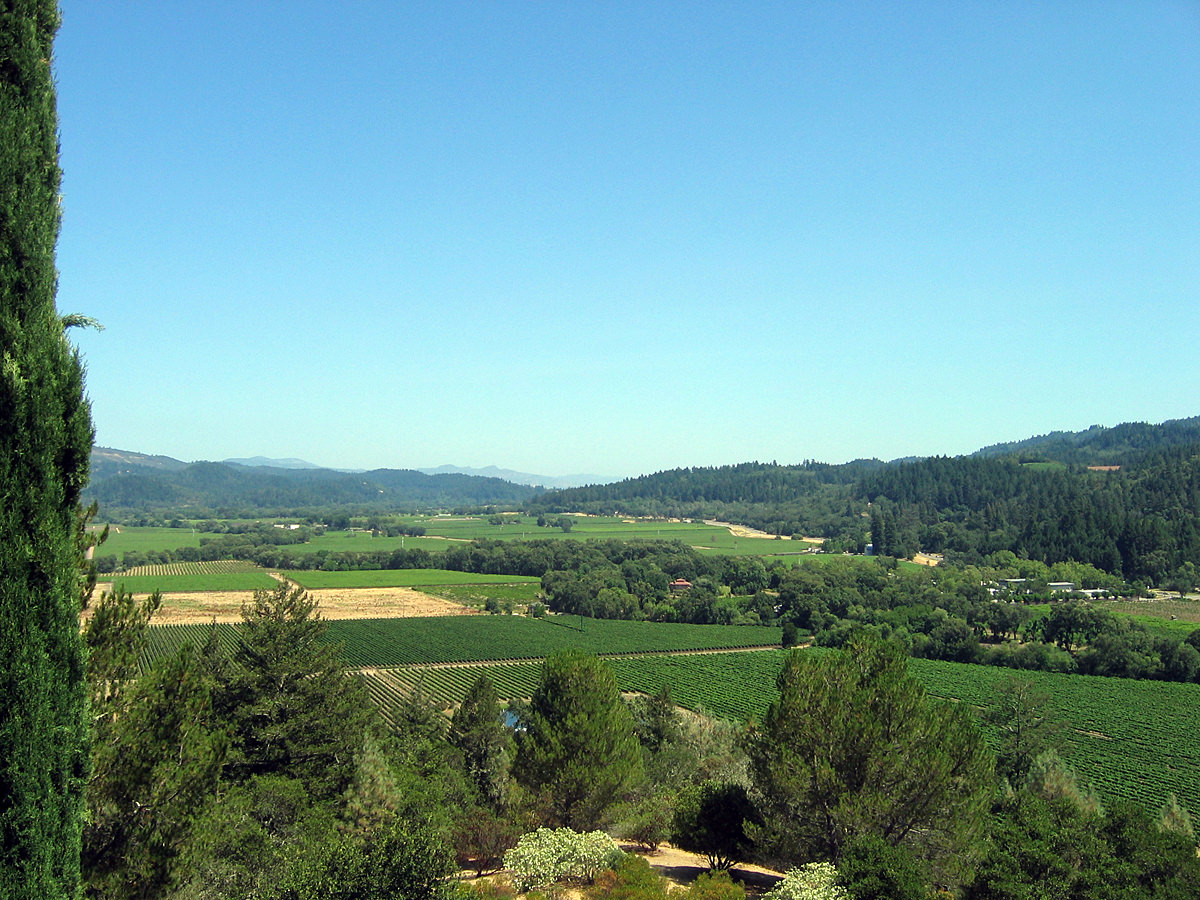
Napa Valley, California
Willamette Valley, Oregon
See what I mean?
Also, despite what people think, Oregon, and the Northwest in general, is not one continual rainfall. One of the things that I've been proud of for quite some time, as it directly relates to the beauty of this place, is its incredible geological and climatic diversity, and the surprising way that diversity stacks Oregon up in comparison to other regions of the country.
I do not deny that there is beauty to be found across this great nation, nor do I imply we hold a monopoly on it. But what is amazing is the way in which so many diferent places in Oregon compare to so many different parts of the rest of the country. With the exception of a few very extreme examples (The Everglades, or the Grand Canyon, for instance), if you pick a specific place in America known for its geology, climate, and scenery, I can, with some effort, find somewhere in Oregon with similar features -- in some cases, admittedly, the Oregon version is a second-best copy, but in other cases, I'd happily stack Oregon up for comparison with confidence that we'd come out on top.
Let me give you a few examples. For copyright reasons, I am not posting any of the gorgeous pictures I found online here -- rather, I'm posting links and letting you see for yourself:
Hudson River Valley, New York
Columbia River Gorge, Oregon/Washington Border
Arizona's Painted Desert
Oregon's Painted Hills
The Blue Ridge Mountains
The Coast Range
A Maine Lighthouse
Oregon's Heceta Head Lighthouse
Grand Tetons, Wyoming
Wallowas, Oregon
Napa Valley, California
Willamette Valley, Oregon
See what I mean?
Tuesday, March 24, 2009
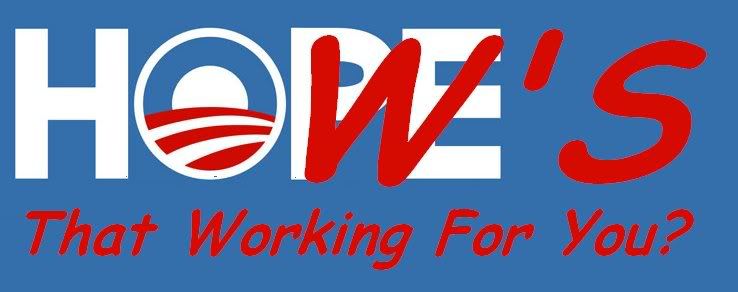
Change We Can No Longer Suspend Disbelief In
I've been watching with a mixture of sadness, fatalistic amusement, anger, and a bit of regretful vindication the Obama administration's handling of things, especially the financial crisis, and was inspired to create the following image:
Saturday, March 21, 2009
What He Said
Robert the Llama Butcher has posted a YouTube video of Representative McCotter (R - Michigan) lambasting the Dems over the AIG flap. Go watch it -- I couldn't have summed up my own feelings on this any better.
Tuesday, March 17, 2009




.jpg)



Serendipity
I took a "What Beer Are You?" quiz, and guess what I scored? You, you guessed it:

Okay, we all know Guinness is the best possible score on any "What Kind Of Beer Are You" test, so you can just go on and pat yourself on the back now. Like the world's most famous brew, you're genuine, you've got good taste, and you're sophisticated. What else can I say, except congratulations?
If your friends didn't score the same way, get ready for them to say: Guinness is too heavy; it's an acquired taste; it's too serious--and they probably think those things about you at times. But just brush 'em off. Everybody knows Guinness is the best. Cheers.
A tip of the Toque to William Powell at The Bow Ramp.
Your result for The If You Were A Beer Test...
Guinness
(100% dark & bitter, 67% working class, 100% genuine)
Okay, we all know Guinness is the best possible score on any "What Kind Of Beer Are You" test, so you can just go on and pat yourself on the back now. Like the world's most famous brew, you're genuine, you've got good taste, and you're sophisticated. What else can I say, except congratulations?
If your friends didn't score the same way, get ready for them to say: Guinness is too heavy; it's an acquired taste; it's too serious--and they probably think those things about you at times. But just brush 'em off. Everybody knows Guinness is the best. Cheers.
Take The If You Were A Beer Test at
A tip of the Toque to William Powell at The Bow Ramp.
Monday, March 16, 2009
Self-Evident
A Tip of the Toque to Mike at South Texian:

My Conservative Identity:
You are a Free Marketeer, also known as a fiscal conservative. You believe in free-market capitalism, tax cuts, and protecting your hard-earned cash from pick-pocketing liberal socialists.
I'm not so sure I agree with the results -- I DO believe in the free market, but I also believe that it is merely a tool to be used to secure even more basic freedoms, and is itself dependent on other important freedoms in order to function properly. But I did my best to answer the questions frankly and accurately, and that's what came up, so there you go.
Pop Quiz
Four Questions:
1. Which of the two main presidential candidates, , during the election, claimed that "the fundamentals of the economy are strong", despite the current crisis?
2. What was his critics' response?
3. Which of those candidates is now maintaining that claim?
4. Which of them are we to believe?
1. Which of the two main presidential candidates, , during the election, claimed that "the fundamentals of the economy are strong", despite the current crisis?
2. What was his critics' response?
3. Which of those candidates is now maintaining that claim?
4. Which of them are we to believe?
Sunday, March 15, 2009
Qoute of the Day
"If Michelle Obama doesn't lay off all this "giving back" stuff pretty soon, she's going to find herself in Warren Buffett's tax bracket. "
- Ann Coulter
(A Tip of the Toque to Mike LaRoche at South Texian.
- Ann Coulter
(A Tip of the Toque to Mike LaRoche at South Texian.
Saturday, March 14, 2009
Monday, March 02, 2009
More Hopeychanginess
A Tip of the Toque to Phineas at Public Secrets.
Once again, a member of the administration of the President Who Will Clean Up Washington has some questions to answer regarding the ethics of his behavior.
Change We Can Believe In.
Once again, a member of the administration of the President Who Will Clean Up Washington has some questions to answer regarding the ethics of his behavior.
The man who is President Obama's newly minted urban czar pocketed thousands
of dollars in campaign cash from city developers whose projects he approved or
funded with taxpayers' money, a Daily News probe found.
Bronx Borough President Adolfo Carrion often received contributions
just before or after he sponsored money for projects or approved important
zoning changes, records show.
Most donations were organized and well-timed.
Change We Can Believe In.
Sunday, March 01, 2009
Das is Das Amore
As I've mentioned, my sister's genealogy research has confirmed our Celtic and Germanic ancestry -- German, English, Welsh, Scot, Irish, Swedish, with a smattering of Swiss and French.
But my favorite ethnic cuisine, hands down, is Italian (ok, not hands down -- well-made Mexican gives it a run for its money. As do Northwest cuisine and Barbecue, both of which are American and thus no what I consider "ethnic"). And I must say, I'm quite good at it. I even suggested a while back to TFR that maybe I should try my hand at it as my business. She demurred. Until tonight, when I made lasagna.
I started with a green bell bepper, 3/4 of a sweet yellow onion, and a couple stalks of celery, all fine diced. I sweated them in some olive oil along with a butt ton (that's 1.35 metric assloads for my readers outside the US). That went ito a big pot along with 30 oz. of tomato sauce and 6 oz. of tomato paste. Then I browned 1 lb of hamburger and 12 oz. ground pork along with more garlic, dried parsley, oregano, basil, salt, pepper, paprika, and powdered chili. I added this to my sauce, as well as the wine I used to deglaze the skillet. I also added some balsamic vinegar, fresh basil and fresh oregano, as well as more salt and pepper. Once it was ready, I latered sauce, ricotta, pasta, sauce, ricotta, pasta, sauce, ricotta, pasta, sauce, ricotta, pasta, sauce, mozzarella, covered it with foil and baked for 35 minutes, then removed the foul, added a little more mozz., parmesan, and baked it for 10 more minutes, then hit it with the broiler for 3 more, then let it cool and added more parmesan.
But my favorite ethnic cuisine, hands down, is Italian (ok, not hands down -- well-made Mexican gives it a run for its money. As do Northwest cuisine and Barbecue, both of which are American and thus no what I consider "ethnic"). And I must say, I'm quite good at it. I even suggested a while back to TFR that maybe I should try my hand at it as my business. She demurred. Until tonight, when I made lasagna.
I started with a green bell bepper, 3/4 of a sweet yellow onion, and a couple stalks of celery, all fine diced. I sweated them in some olive oil along with a butt ton (that's 1.35 metric assloads for my readers outside the US). That went ito a big pot along with 30 oz. of tomato sauce and 6 oz. of tomato paste. Then I browned 1 lb of hamburger and 12 oz. ground pork along with more garlic, dried parsley, oregano, basil, salt, pepper, paprika, and powdered chili. I added this to my sauce, as well as the wine I used to deglaze the skillet. I also added some balsamic vinegar, fresh basil and fresh oregano, as well as more salt and pepper. Once it was ready, I latered sauce, ricotta, pasta, sauce, ricotta, pasta, sauce, ricotta, pasta, sauce, ricotta, pasta, sauce, mozzarella, covered it with foil and baked for 35 minutes, then removed the foul, added a little more mozz., parmesan, and baked it for 10 more minutes, then hit it with the broiler for 3 more, then let it cool and added more parmesan.
Monday, February 23, 2009
Family History: That Wasn't What I Expected; Almost Famous; Robbo Would Not Be Pleased; That Would Explain My Love of Chocolate
My sister, being a full-time (but not quite Desperate) housewife and mother, has recently taken up researching our geaneology as a hobby, mostly through the web site Ancestry.com. She's managed to trace our ancestors back as far as the 16th century (the English Branch), and has dug up some fascinating stuff. Among our ancestors were early Pilgrim or Puritan settlers in Massachissetts (not Mayflower passengers, but within a few years, and giving birth in the colony by 1627), and victims of an infamous Massacre in Upstate New York during the Revolution. What I really found interesting were the following tidbits:
That Wasn't What I Expected:
I have always known I had German ancestry -- my surname, after all, is blatantly German, and my sister's research has confirmed my German Ancestry. But what surprised us was that our Patrilineal line was NOT German, despite the family name. In fact, the first of my ancestors born in America was also the first ancestor with that last name. His father, Hendrik Johansson, was born in Sweden, as was HIS father, Johan Hendriksson. Why my ancestor had the middle name Johansson and then the last name that our family now bears is a mystery -- my best guess is either he was orphaned and adopted or his mother remarried. But so far, we don't have any records that say one way or another -- this was in the
Almost Famous:
For a couple of generations, my mother's family has been convinced we were related to Daniel Boone -- there are, after all, several Boones in the family lineage, and from the right part of the country. But my sister's more detailed research has shown conclusively that we are not related to Daniel Boone on my mother's side. On my FATHER'S side, however, we ALMOST are -- my great-grandfather married a woman who was a great-granddaughter of Daniel Boone and a greanddaughter of Meriwether Lewis. Unfortunately for us, she was his second wife, and our family line is from his first marriage.
Robbo Would Not Be Pleased:
This part will dismay my Royalist friend over at TPSAYE: My sister has also discovered in her research that we are direct descendants of a(n) (in)famous(?) roundhead, Daniel Axtell. Being a descendent also of Patriots from our own revolution, and a staunch Declarationist, I'm actually rather proud of this point.
That Would Explain My Love of Chocolate:
So it turns out that I am more and less of a mutt than I always suspected. The Irish, English, Wlsh, Scot, and German ancestry we always believed in has been confirmed. There is still no evidence of the Cherokee and Choctaw blood that has been hinted at from my mother's side, but that is offset by the revelation of Swedish ancestry, as well as French (to my horror) and... this is the one that really blew my mind... Swiss -- from a small valley south of Lake Geneva, just a few miles from the French border.
I'll post more if it seems interesting enough.
That Wasn't What I Expected:
I have always known I had German ancestry -- my surname, after all, is blatantly German, and my sister's research has confirmed my German Ancestry. But what surprised us was that our Patrilineal line was NOT German, despite the family name. In fact, the first of my ancestors born in America was also the first ancestor with that last name. His father, Hendrik Johansson, was born in Sweden, as was HIS father, Johan Hendriksson. Why my ancestor had the middle name Johansson and then the last name that our family now bears is a mystery -- my best guess is either he was orphaned and adopted or his mother remarried. But so far, we don't have any records that say one way or another -- this was in the
Almost Famous:
For a couple of generations, my mother's family has been convinced we were related to Daniel Boone -- there are, after all, several Boones in the family lineage, and from the right part of the country. But my sister's more detailed research has shown conclusively that we are not related to Daniel Boone on my mother's side. On my FATHER'S side, however, we ALMOST are -- my great-grandfather married a woman who was a great-granddaughter of Daniel Boone and a greanddaughter of Meriwether Lewis. Unfortunately for us, she was his second wife, and our family line is from his first marriage.
Robbo Would Not Be Pleased:
This part will dismay my Royalist friend over at TPSAYE: My sister has also discovered in her research that we are direct descendants of a(n) (in)famous(?) roundhead, Daniel Axtell. Being a descendent also of Patriots from our own revolution, and a staunch Declarationist, I'm actually rather proud of this point.
That Would Explain My Love of Chocolate:
So it turns out that I am more and less of a mutt than I always suspected. The Irish, English, Wlsh, Scot, and German ancestry we always believed in has been confirmed. There is still no evidence of the Cherokee and Choctaw blood that has been hinted at from my mother's side, but that is offset by the revelation of Swedish ancestry, as well as French (to my horror) and... this is the one that really blew my mind... Swiss -- from a small valley south of Lake Geneva, just a few miles from the French border.
I'll post more if it seems interesting enough.
Monday, February 02, 2009
Ex Libris
Spoiler Warning: Lurch, don't read this. I promise I'll reread, and I want you to approach the book unbiased.
Oh. My. Lord.
I just finished The Last Centurion by John Ringo. It's an excellent near-future novel (military sci-fi? Maybe, thos the Sci os just barely fi. More on that in a moment) set about 120 years from now. In the novel, a new Ice Age and a flu epidemic have rocked the world. Theprotagonist hero of the book is Bandit Six, a U.S. Army captain left with his unit in the Middle East when the Eflluent hits the Aerator. The book is written as his blog memoirs of all that transpire.
The book is part Michael Crichton, part Tom Clancy, and I found it all gripping. I lost a lot of sleep reading it, since the only time I've had to read it was late at night. Whether it was the explanatory chapters or the action, it all had me engrossed, and was written in a believable, approachable, no-nonsense (Bandit Six would probably say no BS) tone. Mr. Ringo is an Army vet, so I trusted his representation of members of our military, and although it was fiction, it gave me deeper respect for our troops and all they do.
The book isn't for everyone -- particularly not for those of a particular political or philosophical bent, and especially not for those of that persuasion who don't like their assumptions about What Is So being challenged. It is politically and philosophically unambiguous, and the parallels to current events and politics is intentionally obvious. A couple of political figures in the book are brazenly patterned after real life politicians. The names are changed, but you'll recognize theem right away -- I'm sure this is "a feature, not a bug".
But if you're open to looking at things from a different angle, or if you happen to agree with Mr. Ringo which I admit to, (although I also admit I'm not quite as stark in my holding of those opinions as he is), it's a good read, andit might just make you think. It might also scare you, sicken you, sadden you, but also move you, inspire you, and challenge you, all in turn.
I only had two minor quibbles with the book.
The first has to do with the "crichtonesque" parts of the book, particularly those addressing the climatic shift and flu epidemic that are the backdrop, as well as the agricultural ramifications. At certain points, the data and processes that are explained seem to be taken from currently available, real-life data. At others, it is obviously future-occurring fiction, albeit extrapolated fro mreal life hypotheses. The problem I have is that the way Bandit Six (and thus Ringo) presents the information makes it difficult to distinguish the two. To a certain extent this is good storytelling, but I fear both what I call the "Left Behind" effect -- readers who take the extrapolation as being reality -- and a "guilty by association" reaction by those who disagree with Ringo, who will reject the current data as being just as speculative as the future fiction data. As an aside, I think the extrapolation is not only possible, but plausible. However, as the dustcover iteslf says, this is just one POSSIBLE future. Since I already saw some similarities between Ringos and Crichtons works, perhaps Mr. Ringo could have taken a cue from Crichton and used footnotes for the real life data.
The second nit is even more minor, but it leads me to some reflections on the nature of "near-future fiction" and sci-fi in general. Let me explain the reflections first, and then the minor nit with Mr. Ringo's work:
There was a time when science fiction was, if you will, the prophet of technology. From Jules Verne's Nautilus to the Star Trek Communicators that became today's cell phones, what one generation's sci fi authors would dream up, another generation's scientists and technicians would make reality. Often it took a couple generations, and by then, science fiction had moved on to bigger and better things. Scinece had to move fast to try to keep up with science fiction. But as technological progress increases in pace, science seems to not only be keeping up, but catching up with science fiction, and may soon pass it. This is especially true of near-future sci fi. Unless you go the Greg Bear route and write about life a thousand years from now, and instead write about things "the day after tomorrow", you run the risk that by the time you go to print, your day after tomorrow will look more like the day before yesterday (I'm reminded of an episode of Viva Variety! in which Johnny Blue Jeans proposes a futuristic action movie set in "The yearrrr Twoooo Thouuuuusand......" -- the show was aired in the late 1990's). The "prophet" may soon be just a historian.
Case in point from The Last Centurion:
At a couple of points in the book, while Bandit Six is describing military engagements involving the Strykers under his command, he notes that the machine gun cupolas of the TC (Track, or vehicle Commander) positions are up-armored and thus safer for the TC's.
This left me wondering why, if it's 2019, the Strykers aren't equipped with CROWS, since at least some vehicles deployed in real life in Iraq since 2004, 15 years earlier than the book, were already deploying them and the systems wre in more common use by 2008.
This is not to disparage Ringo's book or his skill as a writer -- I'm assuming that given that the book was published in 2008, and it may have taken Mr. Ringo a year or so to write the book, and it may not have yet been readily apparent that CROWS systems would be so widely adopted.
Despite those minor irritants, the book was a thouroughly good read. I hope we can look forward to reading more about the world, and exploits, of Bandit Six.
Oh. My. Lord.
I just finished The Last Centurion by John Ringo. It's an excellent near-future novel (military sci-fi? Maybe, thos the Sci os just barely fi. More on that in a moment) set about 120 years from now. In the novel, a new Ice Age and a flu epidemic have rocked the world. The
The book is part Michael Crichton, part Tom Clancy, and I found it all gripping. I lost a lot of sleep reading it, since the only time I've had to read it was late at night. Whether it was the explanatory chapters or the action, it all had me engrossed, and was written in a believable, approachable, no-nonsense (Bandit Six would probably say no BS) tone. Mr. Ringo is an Army vet, so I trusted his representation of members of our military, and although it was fiction, it gave me deeper respect for our troops and all they do.
The book isn't for everyone -- particularly not for those of a particular political or philosophical bent, and especially not for those of that persuasion who don't like their assumptions about What Is So being challenged. It is politically and philosophically unambiguous, and the parallels to current events and politics is intentionally obvious. A couple of political figures in the book are brazenly patterned after real life politicians. The names are changed, but you'll recognize theem right away -- I'm sure this is "a feature, not a bug".
But if you're open to looking at things from a different angle, or if you happen to agree with Mr. Ringo which I admit to, (although I also admit I'm not quite as stark in my holding of those opinions as he is), it's a good read, andit might just make you think. It might also scare you, sicken you, sadden you, but also move you, inspire you, and challenge you, all in turn.
I only had two minor quibbles with the book.
The first has to do with the "crichtonesque" parts of the book, particularly those addressing the climatic shift and flu epidemic that are the backdrop, as well as the agricultural ramifications. At certain points, the data and processes that are explained seem to be taken from currently available, real-life data. At others, it is obviously future-occurring fiction, albeit extrapolated fro mreal life hypotheses. The problem I have is that the way Bandit Six (and thus Ringo) presents the information makes it difficult to distinguish the two. To a certain extent this is good storytelling, but I fear both what I call the "Left Behind" effect -- readers who take the extrapolation as being reality -- and a "guilty by association" reaction by those who disagree with Ringo, who will reject the current data as being just as speculative as the future fiction data. As an aside, I think the extrapolation is not only possible, but plausible. However, as the dustcover iteslf says, this is just one POSSIBLE future. Since I already saw some similarities between Ringos and Crichtons works, perhaps Mr. Ringo could have taken a cue from Crichton and used footnotes for the real life data.
The second nit is even more minor, but it leads me to some reflections on the nature of "near-future fiction" and sci-fi in general. Let me explain the reflections first, and then the minor nit with Mr. Ringo's work:
There was a time when science fiction was, if you will, the prophet of technology. From Jules Verne's Nautilus to the Star Trek Communicators that became today's cell phones, what one generation's sci fi authors would dream up, another generation's scientists and technicians would make reality. Often it took a couple generations, and by then, science fiction had moved on to bigger and better things. Scinece had to move fast to try to keep up with science fiction. But as technological progress increases in pace, science seems to not only be keeping up, but catching up with science fiction, and may soon pass it. This is especially true of near-future sci fi. Unless you go the Greg Bear route and write about life a thousand years from now, and instead write about things "the day after tomorrow", you run the risk that by the time you go to print, your day after tomorrow will look more like the day before yesterday (I'm reminded of an episode of Viva Variety! in which Johnny Blue Jeans proposes a futuristic action movie set in "The yearrrr Twoooo Thouuuuusand......" -- the show was aired in the late 1990's). The "prophet" may soon be just a historian.
Case in point from The Last Centurion:
At a couple of points in the book, while Bandit Six is describing military engagements involving the Strykers under his command, he notes that the machine gun cupolas of the TC (Track, or vehicle Commander) positions are up-armored and thus safer for the TC's.
This left me wondering why, if it's 2019, the Strykers aren't equipped with CROWS, since at least some vehicles deployed in real life in Iraq since 2004, 15 years earlier than the book, were already deploying them and the systems wre in more common use by 2008.
This is not to disparage Ringo's book or his skill as a writer -- I'm assuming that given that the book was published in 2008, and it may have taken Mr. Ringo a year or so to write the book, and it may not have yet been readily apparent that CROWS systems would be so widely adopted.
Despite those minor irritants, the book was a thouroughly good read. I hope we can look forward to reading more about the world, and exploits, of Bandit Six.
Subscribe to:
Posts (Atom)